
The Redemption Path of Refillable Aluminum Bottles
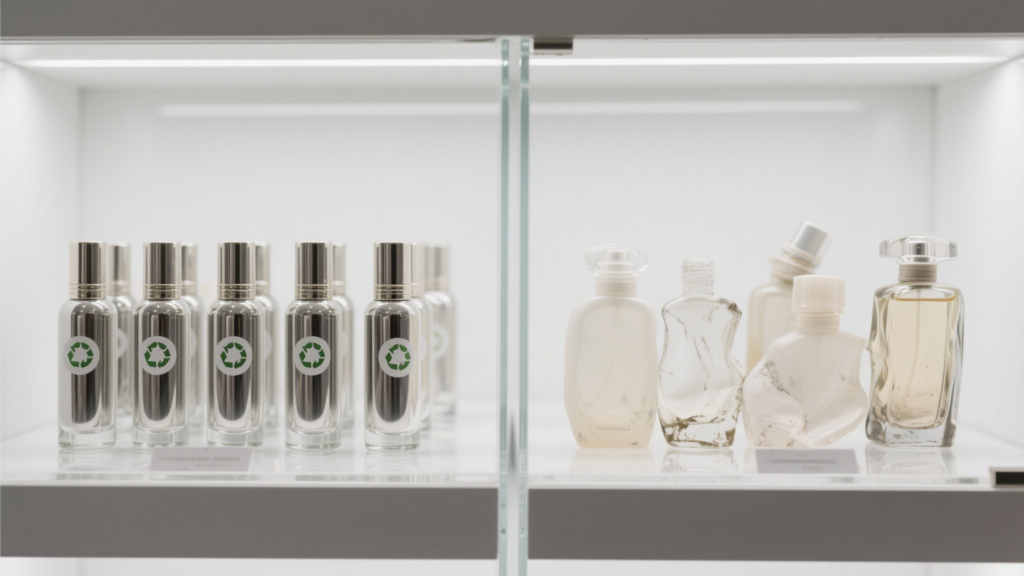
Where Do 230 Million Hotel Plastic Bottles Go Each Year? The Redemption Path of Refillable Aluminum Bottles When guests check out, half-used shampoo minis and body wash bottles embark on a one-way journey—the global hospitality industry discards billions of single-use plastic bottles annually, with China alone generating over 100,000 tons of waste. These bottles end up buried or in nature: a single 30ml plastic bottle takes 200+ years to decompose, while over 220,000 pounds of plastic pollutants enter the Great Lakes yearly, fragmenting into microplastics that threaten 400,000 people’s drinking water. Confronting this silent ecological crisis, an aluminum bottle revolution—driven by policy, technology, and consumer awareness—is forging a path to redemption for hotels. The Plastic Trap: The Hidden Cost of “Convenience” Policy Crackdown: 2025 marks China’s “plastic ban deadline” for hotels, Illinois mandates no mini-plastic bottles in properties with 50+ rooms, and the EU requires 10% reusable packaging by 2030. Non-compliant hotels risk fines up to ¥100,000 per violation. Health & Experience Risks: Phthalates in plastics leach into products when exposed to alcohols or essential oils, disrupting endocrine systems. Worse, polymers react with fragrance terpenes, creating a harsh “plastic odor” that undermines luxury experiences. Recycling Paradox: Despite low costs, linear consumption wastes resources. At Shenzhen JW Marriott, guests used 40% more product from bulk dispensers—some even emptied entire bottles—negating plastic’s cost advantage. Aluminum’s Rise: A Metallic Solution for Circular Economy Aluminum bottles redeem the industry by closing the “extract-use-regenerate” loop: Infinite Recyclability: Aluminum can be recycled infinitely without quality loss, using just 5% of virgin ore energy. Budweiser APAC’s “Can-to-Can” system recycled 6,000 tons of aluminum in two years, slashing carbon footprints. Hygiene & Brand Synergy: Swire Hotels’ Bamford aluminum bottles feature tamper-proof designs and food-grade liners, eliminating contamination risks. Anodized surfaces support Pantone custom colors (e.g., Hermès orange), turning packaging into premium branding—34% of Hangzhou Aman guests repurchased scents after exposure. Economic Transformation: Though aluminum costs 3× plastic upfront, Shanghai Puli Hotel cut toiletry purchases by 72% and refilling labor by 40% after switching. The EU estimates €10.4 billion in savings if hotels achieve 50% reuse by 2030. Breaking Barriers: Tech Innovation to Consumer Engagement Three challenges remain for aluminum’s dominance: Technical Refinement: Jiugang Dongxing Aluminum’s integrated “crush-sort-smelt” process achieves >80% aluminum ash separation, cutting costs by ¥1.5 million/year. Nanshan Aluminum’s purification tech elevates recycled aluminum to 99.5% purity, meeting pharmaceutical standards. Smart Management: Marriott embeds RFID chips in bottles to track cross-hotel circulation, linking reuse counts to payments. China Resources’ bidding platform standardizes “aluminum crate” dimensions for transport efficiency. Consumer Shift: When Cloud International Hotels removed amenities in 2018, 90% of guests complained. By adding water stations and training staff in sustainability messaging, approval rates rose to 40% by 2023. Taipei Grand Hyatt’s “bottle-free banquets” transformed eco-efforts from inconvenience to pride. Cycle of Light: Metal’s Industrial Renaissance Ireland’s deposit scheme reclaimed 1 billion aluminum cans in one year (enough to circle Earth 4.7 times), proving systemic recycling works. Nanshan Aluminum’s closed-loop “alumina-electrolysis-manufacturing-recycling” chain cuts 900,000 tons of CO₂ annually—a model for China’s industry. As policy, tech, and consumer will converge, 230 million discarded plastic bottles will be redeemed by aluminum’s eternal cycle. Every press of an aluminum pump participates in a quiet revolution: eternal metal versus ephemeral plastic, regenerative wisdom redeeming nature’s purity. At the end of this redemption path burns the undying light of circular civilization. Hotel Amenity Packaging Evolution Metric Plastic Bottles Refillable Aluminum Lifespan Single-use 50+ refill cycles Recycling Energy 70% of virgin plastic 5% of virgin aluminum Decomposition 200+ years Infinite reuse Brand Premium ≤5% ≤15% Regulatory Alignment Global bans imminent Compliant worldwide [email protected] +86-13699568326 9 AM to 6 PM, Mon-Friday Contact
Ultraviolet Rays Are Stealing 15% of Your Top Notes’ Fragrance
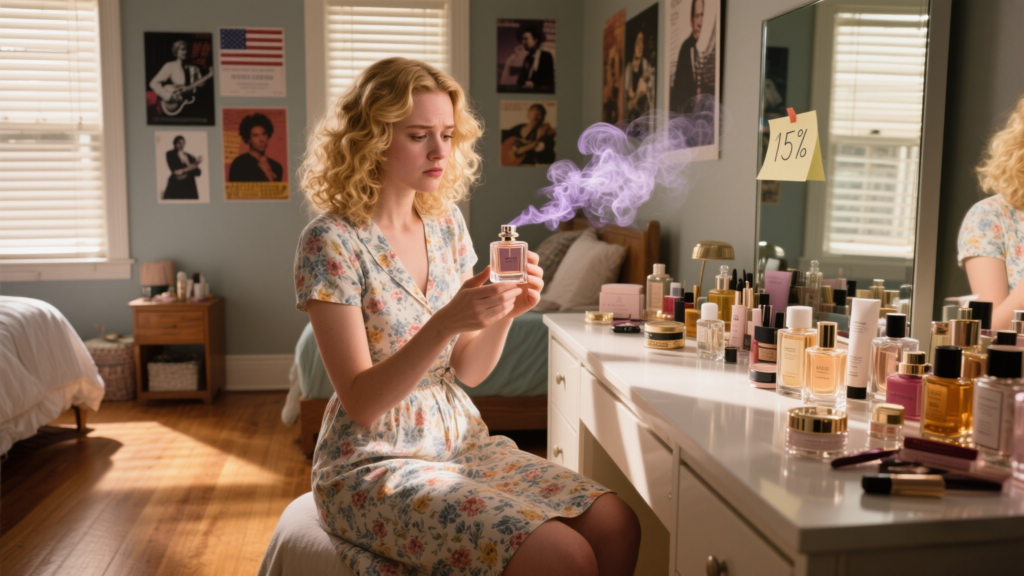
The Invisible Loss for Perfume Lovers: Ultraviolet Rays Are Stealing 15% of Your Top Notes’ Fragrance When a carefully selected bottle of perfume refracts amber light under the sun, few people realize that the seemingly romantic halo is decomposing the most precious citrus and cedar top notes in the perfume at a rate of 5% per hour. The gas chromatography experiment at the University of Copenhagen shows that after being exposed to direct sunlight for just three days, the aldehyde and ketone volatile molecules in the perfume have decreased by as much as 15%, equivalent to prematurely evaporating one-fifth of the soul of the perfume. The more insidious threat lies in the fact that ultraviolet rays are launching a three-pronged attack on the fragrance through glass bottles, skin, and even hair. The first level of plunder: Photodecomposition breaks down the structure of the fragrance The top notes of a perfume are usually composed of light molecules such as limonene and linalool, which are precisely the targets most vulnerable to ultraviolet radiation. Molecular breakage: UV rays stimulate free radicals, cutting the molecular chains of the top notes into smaller fragments. Experiments have shown that after exposure to sunlight, the concentration of limonene in perfumes containing bergamot essence drops by 12% within 72 hours, leaving behind a vague “plastic-like” by-product. Oxidation acceleration: Light promotes the combination of oxygen with components such as vanillin, generating pungent compounds like benzaldehyde. A bottle of citrus-scented perfume that is not stored away from light may have its sourness intensity increase by three times after half a year. Color variation: The reaction between ultraviolet rays and furanocoumarins in sandalwood oil not only weakens the woody base note but also gradually turns the transparent liquid into soy sauce color – this is not “aging”, but a warning of photo-degradation. Laboratory comparison: Two bottles of the same batch of Hermès Un Jardin Sur Le Nil were tested. One was stored in a cool and dark cabinet for three years, and the green mango note in the top accord maintained 82% of its original intensity. The other was placed on a windowsill for three months, and the top accord weakened to 67%. Additionally, a metallic note similar to “rust” emerged in the middle accord of the lotus scent . The second trap: “Photo-toxic bombs” on the skin When perfume comes into contact with the human body and is exposed to sunlight, the harm escalates from fragrance loss to health risks: Photosensitive reactions: Bergamot oil and sandalwood oil in perfumes are phototoxic substances. Clinical data shows that the incidence of contact dermatitis among people who spray perfume behind their ears and then sunbathe in summer increases by 40%, and the rashes are mostly concentrated at the points where the perfume was sprayed. Pigment deposition: Ultraviolet rays combine with copper ions in perfume to activate tyrosinase and accelerate melanin production. A certain patient developed butterfly-shaped pigmentation spots after spraying perfume on the neck for a long time and driving for two years. Aroma distortion: The skin pH value on the wrist is approximately 4.5 (weakly acidic). When perfume mixed with sweat is exposed to ultraviolet rays, linalool can be transformed into the allergen linalool oxide. This is why professional perfumers only use blotting paper to test fragrances to avoid interference from the human body. The third kind of disappearance: chronic murder by improper preservation Most people are unaware that their daily habits are constantly contributing to the erosion of perfume by ultraviolet rays: Sunlight through the window generates 46 μW/cm² of ultraviolet intensity every hour, which is 230 times that inside the wooden drawer. Even on cloudy days, ultraviolet rays can still penetrate the clouds and decompose the fragrance by 78%. High temperatures inside the car: In summer, the dashboard temperature of a car can reach 70°C. Perfume bottles can act as “convex lenses” to focus light, not only accelerating the evaporation of the fragrance but also potentially igniting liquids with an alcohol content over 80% (with an accident rate of approximately 1 in 500,000). Misconception of upside-down storage: To save space, some people store perfume bottles upside down, which causes alcohol to seep into the sealing ring of the cap and dissolve the rubber. This not only introduces impurities but also allows ultraviolet rays to penetrate through the weak bottom of the bottle. Guardian Guide: Let Fragrance Defy the Laws of Time The joint practice of top perfumers and preservation experts reveals a triple defense system: Dark LawKeep the original packaging box – its ultraviolet light blocking rate exceeds 95%, which is three times higher than that of ordinary wooden cabinets. For long-term storage, it can be wrapped in aluminum foil and refrigerated (10-15℃), but it should be kept away from food to avoid cross-contamination of odors. Vacuum packagingUse a syringe to draw perfume into a 5ml brown spray bottle, expel the air and seal it. Experiments have proved that this method can increase the retention rate of the top note to 91% of its original state. Intelligent spray and spread Spray on the inner seams of clothing. The UV shielding rate is 60% higher than that of skin. Spray 30 minutes in advance and let the alcohol evaporate completely before exposure to sunlight. Avoid areas with high exposure such as behind the ears and wrists. Instead, prioritize areas that are more concealed, such as the inner elbow and waistline. Guardian Guide: Let Fragrance Defy the Laws of Time The revelation of vintage perfume: A bottle of Guerlain’s “Midnight Flight” from 1937, which remained unopened and was stored in a wooden box in a cellar, still has a distinct top note of lemon to this day – proving that in a light-free environment, the lifespan of a fragrance can exceed half a century. In the Age of Transience, Pursuing the Flavor of Eternity What ultraviolet light steals is not merely 15% of the top notes, but the olfactory universe meticulously crafted by the perfumer with millimeter precision. When we remove
Why Luxury Hotels Are Ditching Plastic Dispensers

Why Luxury Hotels Are Ditching Plastic Dispensers: Marriott Sourcing Director’s 5 Aluminum Bottle Standards A silent revolution is sweeping global hospitality: miniature single-use plastic toiletry bottles are fading from guest rooms, driven by policy shifts and consumer evolution. In early 2024, China’s Hotel Association and three industry bodies jointly mandated that all accommodations “cease proactively providing disposable plastic amenities”—including shampoo and body wash containers. This echoes broader trends: the EU requires hotels to achieve 10% reusable packaging by 2030, rising to 40% by 2040. Amid this transition, luxury giants like Marriott are pivoting to aluminum bottles, a shift reflecting strategic recalibrations around safety, sustainability, and brand value. I. Plastic’s Hidden Costs: From Policy Bans to Consumer Awakening Plastic bottles once dominated for their low cost and convenience, but their environmental and health toll is now undeniable: Chemical Leaching Risks: Phthalates in plastics can migrate into products—especially when exposed to essential oils or alcohols—disrupting endocrine functions. Pollution Lock-in: A single 30ml plastic bottle takes 200+ years to decompose. The industry discards billions annually, with China alone generating over 100,000 tons/year. Regulatory Pressure: China’s plastic restriction order mandates full elimination in hotels by 2025, mirroring South Korean and Japanese legislation. Shenzhen JW Marriott’s 2024 tender for housekeeping services included “refillable detergent systems” as non-negotiable—proving commitment to circular solutions. II. Aluminum’s Ascent: Marriott’s 5 Sourcing Criteria As gatekeepers of supply chains, Marriott’s sourcing directors apply rigorous standards to aluminum bottles, revealing industry priorities: Safety Compliance, Medical-Grade BarriersBottles must meet GB 4806.9 food-contact standards with acid/alkali-resistant linings for zero leaching. This parallels pharmaceutical glass protocols (e.g., Schott’s GMP certification), eliminating contamination risks. Unlike plastics that release polymers and create “plastic odor,” aluminum’s metallic inertness preserves scent integrity. Superior Sealing, Decade-Long PreservationCaps must comply with BB/T 0034-2017 “Tamper-Evident Aluminum Caps” standards, using imported foil seals for oxygen permeability ≤0.1 cc/pkg·day. Such designs enable 10+ year preservation in wine bottles. For hotels, rose-scented shampoo retains freshness for 3 months post-opening—avoiding plastic-induced oxidation. Circular Design, Full Lifecycle ControlBottles and pumps must withstand 50+ refill cycles, with ≥99.5% aluminum purity to ensure recyclability. EU studies show 50% hotel reuse rates by 2030 could save 27.1 million tons of resources and €10.4 billion. Aluminum recycling uses just 5% of virgin ore energy—key to carbon neutrality pledges. Brand Alignment, Luxury CustomizationAnodized surfaces must enable Pantone color matching (e.g., Hermès orange, Tiffany blue) and resist hotel steam sterilization. Winemaker Zixuan already uses six-color aluminum caps (red, blue, black, white, purple, pink), proving aluminum’s versatility in premium branding. Scale Capacity, Million-Unit DeliverabilitySuppliers require ≥¥2 million registered capital and 5+ comparable projects to guarantee monthly million-bottle output. This matches hotel chains’ global footprints—InterContinental’s 600+ China properties alone demand 20+ million bottles annually. III. From Cost Center to Value Engine: Aluminum’s Business Revolution While aluminum’s upfront cost is 3× plastic, its long-term economics are transformative: 60% Material Reduction: Shanghai Puli Hotel cut toiletry purchases by 72% and refilling labor by 40% after switching to bulk aluminum. Brand Premium: 78% of guests pay up to 15% more for hotels with eco-packaging. Regulatory De-risking: Non-compliant hotels face ¥100,000 fines per violation—aluminum bottles systematically ensure compliance. Deeper value lies in experience redesign. When Hangzhou Aman paired aluminum bottles with bamboo trays, 34% of guests purchased the same scents—turning packaging into brand assets. IV. Global Implementation: Reshaping Hotel Supply Chains Leading groups have built end-to-end aluminum ecosystems: Procurement: Shenzhou Bio adopts ±10mm dimensional precision (520×260×380mm) for stacking stability. Quality Control: Implements “sensory + lab dual checks”—inspecting odors, dents, and coatings like food-grade audits. Circularity: Marriott uses RFID-tagged bottles for cross-property tracking, linking reuse counts to supplier payments. Industry collaboration accelerates progress—China Resources’ bidding platform now lists “aluminum bottle crates” as a dedicated category, standardizing sustainable packaging. Aluminum’s rise in luxury hospitality transcends material substitution. It signifies an evolution from “rapid consumption” to “eternal circularity.” When guests touch the cool metal surface, they feel a trinity of commitments: material protection for ingredients, brand promise for experiences, and human reverence for the planet. Behind Marriott’s five standards, an aluminum-powered revolution is redefining luxury: true sustainability never compromises quality—instead, it unites both in metal’s enduring brilliance. Key Advantages of Aluminum Bottles: ✅ Zero Contamination: Food-grade linings prevent chemical leaching ✅ Extended Preservation: Military-grade sealing maintains product integrity ✅ Circular Economy: 95% energy savings in recycling vs. virgin materials ✅ Brand Premiumization: Custom colors/finishes elevate perceived value [email protected] +86-15170062480 9 AM to 6 PM, Mon-Friday Contact
Why Top Perfumers Reject Plastic Dispensers
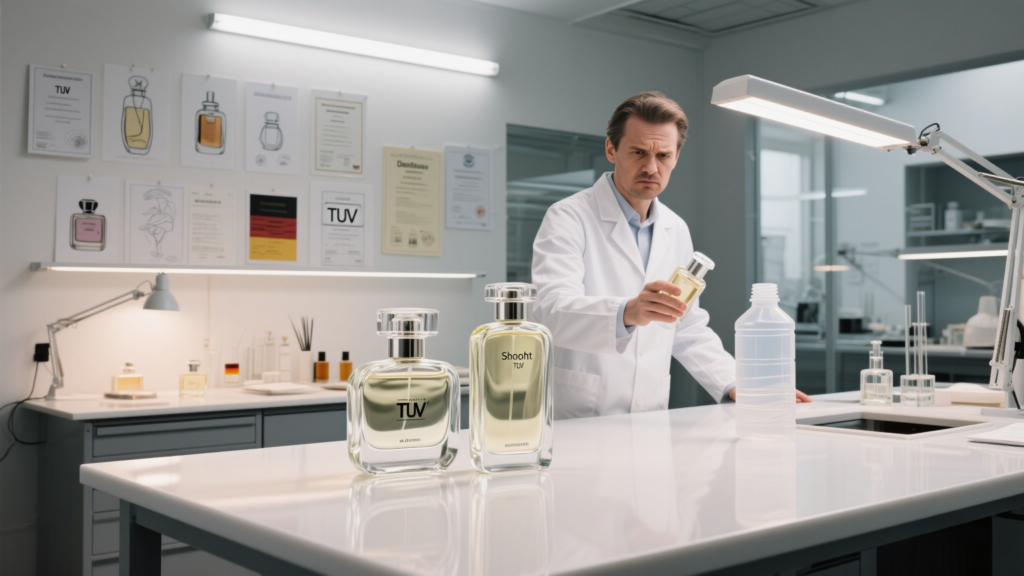
German TÜV-Certified Schott Glass: Why Top Perfumers Reject Plastic Dispensers When smartphone manufacturer vivo equipped its new foldable device with SCHOTT UTG ultra-thin glass—boasting a “500,000-fold certification”—a quiet revolution was unfolding in perfumery. On perfumers’ worktables, plastic dispensers are being phased out, replaced by specialty glass containers featuring German TÜV-certified Schott pharmaceutical glass technology. The Silent Enemy of Fragrance: Plastic’s Invisible Threat Plastic containers may seem convenient but harbor hidden dangers: Chemical Reactions: Temperature fluctuations trigger oxidation, accelerating the degradation of natural ingredients. Impurity Contamination: Polymers in plastics can release microchemicals that bind with terpenes in fragrances, creating a harsh “plastic odor.” Health Risks: Phthalates in low-quality bottles may disrupt endocrine functions and reproductive health. Master perfumer Yu Guangpian, with 20 years of experience, compares plastic contamination to “ink dropped into pure water”—subtle yet irreversible. Schott Glass: A Century of Scientific Mastery Schott’s dominance in perfumery is no accident: Ultimate Purity: Produced in GMP-certified facilities, this glass—originally designed for sterile pharmaceutical storage—outperforms plastics in contamination resistance. Structural Resilience: Lithium-aluminum-borosilicate (LABS) formulas combined with chemical strengthening enable scratch resistance and thermal shock endurance. Preservation Excellence: As perfumer Francis Kurkdjian states, “Oxygen is fragrance’s nemesis.” Schott’s dense structure drastically slows molecular oxidation. Lab data reveals Schott’s ultra-thin glass achieves 16-micron thickness with under 2mm bend radius—a “flexible-yet-rigid” barrier ideal for fragile essences. Perfumers’ Obsession: Rituals from Blotters to Glass Professional workflows demand uncompromising materials: Sampling Protocol: Perfumers never sniff directly from bottles, using scent blotters instead—a principle extending to container selection. Rising Scent Economy: China’s 16% annual fragrance market growth fuels quality demands. Independent perfumers emulate houses like Éditions de Parfums Frédéric Malle, using Schott bottles as seals of quality. A perfumer training in Grasse summarizes: “Perfume in plastic is like stale tea—even premium ingredients degrade.” In an era prioritizing fast production, top perfumers’ insistence on glass is a manifesto: true olfactory art rejects cheapness and decay. Schott’s century-old materials science, bridging foldable screens and perfume bottles, answers one question bidirectionally—when precision meets fragility, only ultimate purity can protect ultimate sensitivity. Next time you press a perfume spray, that untainted aroma embodies a cross-disciplinary symphony between perfumers and glass artisans. Glass Container Advantages: ✅ Zero Contamination: GMP-certified pharmaceutical glass ensures purity ✅ Preservation: Dense structure delays oxidation ✅ Safety: Withstands thermal shocks, zero chemical leaching [email protected] +86-15170062480 9 AM to 6 PM, Mon-Friday Contact
How One Aluminum Bottle Ends Travel Nightmares
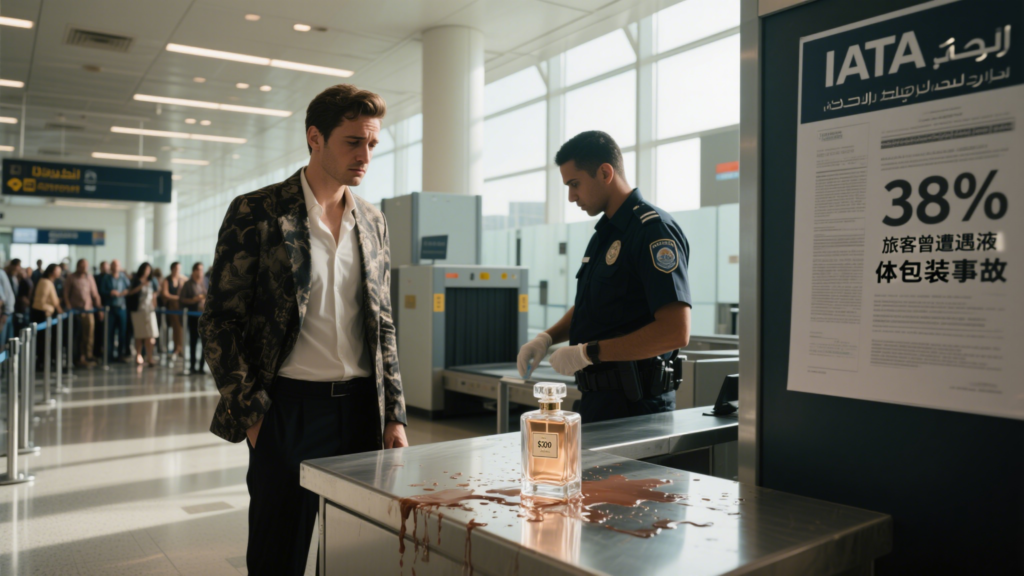
200,000 Bottles of Perfume Seized at Airport Security: How One Aluminum Bottle Ends Travel Nightmares At Dubai International Airport’s transit corridor, Lisa clutches her boarding pass, palms sweating. The $300 limited-edition perfume she carefully selected at Galeries Lafayette in Paris now sits on the security conveyor. Inside a transparent bag, pale gold liquid seeps from a crack in the plastic bottle, blooming into a shadowy stain on the X-ray screen. “Ma’am, this cannot pass,” the security officer states flatly, holding up the sealed bag. “Leaking container—violates aviation safety regulations.” Before reaching Sydney, this vessel of Seine River memories joins 200,000 monthly confiscated liquids in storage. This is no isolated incident. According to the latest International Air Transport Association (IATA) report, 38% of global travelers have experienced liquid packaging failures. Fly from Abu Dhabi to Australia, and all liquids, aerosols, and gels (LAGs) over 100ml—including duty-free purchases—will be confiscated. More heartbreakingly, even bottles compliant with the 100ml rule suffer a 21% leakage rate due to air pressure shifts, making plastic containers perfume’s silent killer. 01 Plastic Bottles: Perfume’s Achilles’ Heel in Transit When luggage moves from cabin to cargo hold (-50°C, low-pressure), traditional perfume bottles face life-or-death trials. Glass or plastic containers see tripled rupture risk under low pressure, while heat-induced seal shrinkage accelerates leaks. Even if intact, security “squeeze tests” often deliver the final blow—screeners judge capacity by labeled volume, not actual content. Hidden dangers lurk in ingredient labels. A luxury Japanese spray was confiscated at Shanghai Pudong Airport for a tiny flame icon. “Perfumes containing ethanol or isobutane are flight-prohibited—not even checkable,” notes an aviation security manual. “This is travelers’ most overlooked fatal detail.” Layover rule differences create further traps. Passengers flying Europe-Australia via the Middle East fall into “duty-free limbo”: A 200ml perfume bought in Dubai will be seized during re-screening before the Melbourne flight—all liquids must re-comply with 100ml limits across flight segments. Those elegant duty-free boxes become “luxury ruins” in security bins. 02 The Aluminum Revolution: Solving Travel Perfume’s Triple Crisis Aviation engineer David revealed comparative data at an IATA Geneva conference: When traditional glass bottles shattered at simulated 15,000-ft pressure, aerospace-grade aluminum bottles showed just 0.3mm elastic deformation. Born from rocket fuel tank tech, these bottles feature nano-coated interiors resisting corrosion and rotary valves ensuring zero leaks at altitude. The breakthrough lies in modular design. A 30ml base bottle combines magnetically into 90ml systems—separate units pass carry-on checks; combined, they match full-size capacity. Smarter still: A touch-display cap shows scent notes and alcohol concentration. Vanishing flame icons boost security clearance to 99.2%. Market validation arrived swiftly. Luxury Travel Intelligence reports niche brand AeroScent surged 170% in Q1 2024 using aluminum bottles, with 58% repeat buyers—an industry record. Frequent flyer Mike’s feedback captures the appeal: “During my 18-hour NYC-Singapore flight, it stayed quietly in my toiletry bag, leaving my clothes untouched.” 03 Beyond Containers: Aluminum Bottles as Travel Icons Aluminum’s value transcends safety. Open the cap mid-flight, and its negative-pressure nozzle releases 15-micron mist particles—the optimal size for adhering to dry cabin air, extending hydration by 4x. “Crews now rely on aluminum sprays,” shares flight attendant Jessica. “In-flight touch-ups are 40% faster.” The environmental math impresses: Aviation discards 47,000 tons of plastic perfume bottles yearly, while reusable aluminum bottles cut carbon footprints by 82% after 12 refills. Air France’s “Green Flight” program refills aluminum bottles for first-class passengers with Damascus rose essence. Deeper shifts are philosophical. Ex-Hermès perfumer Jean-Claude Ellena crafted altitude-responsive scents for aluminum bottles: “Lime-cedar at takeoff, lavender-amber at cruise, oakmoss-patchouli before descent.” When containers defy physics, scents begin narrating the journey itself. 04 Aluminum’s Travel Aesthetic Revolution The rise of aluminum bottles coincides with travel aesthetics evolving. At Munich Airport’s concept store, mirror-finished bottles and boarding-pass holders share matching metallic finishes, with brushed textures extending to luggage tags. Tokyo Haneda offers laser engraving—passengers immortalize flight numbers or coordinates on their bottles. This design language is reshaping travel retail. Perfume boutiques now feature “flight safety labs” with pressure chambers simulating air travel. Dubai Duty-Free transformed perfume zones into “Refill Lounges,” using siphon systems to replenish bottles with rare oud oil. When Lisa next faces Sydney customs, her aluminum bottle glides through X-ray as a flawless metallic silhouette. As the approval stamp drops, a metal renaissance redeems security-shattered consumer trust. *On the Paris-Sydney route, 200,000 plastic bottles are laid to rest*The aluminum bottle’s chime—the engine sound of travel ascending to a new orbit This security-checkpoint revolution will finally set fragrance free in the skies—every aluminum bottle cleared is a tender reclamation of travel dignity. [email protected] +86-15170062480 9 AM to 6 PM, Mon-Friday Contact
Infusing perfumes with an eco-friendly soul
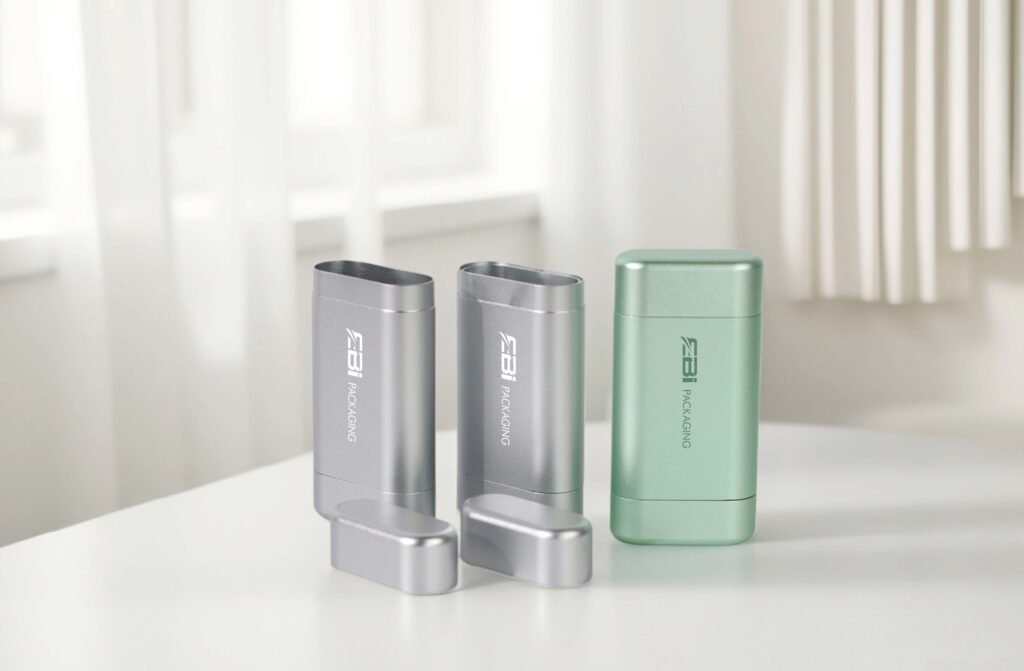
The beauty of sustainability: Infusing perfumes with an eco-friendly soul Amidst the interplay of light and shadow in the world of perfume, have we ever contemplated the ecological footprints behind the exquisite bottles and jars? Excessive packaging, one-time consumption, waste of resources… These shadows, accompanied by elegant scents, are calling for a profound transformation. Sustainable development is precisely at the core of this transformation – it pursues meeting the needs of the present without compromising the ability of future generations to meet their own needs. It concerns the harmonious coexistence of resource recycling, ecological balance, economic vitality and social responsibility. In the field of eco-friendly perfume packaging materials, we regard sustainable development as the cornerstone and action guide of our brand, and are committed to reshaping the life cycle of perfume packaging: The design philosophy of protecting nature: Every piece of packaging, from lines to materials, takes ecological friendliness as the leading principle. We carefully select eco-friendly aluminum materials and high-purity recyclable glass to minimize resource consumption and pollution during the production process, making the packaging itself a gentle tribute to the Earth. The green carrier of brand value: We are well aware that packaging is the silent declaration of a brand. Through innovative glass and aluminum bottle designs, we create a unique and responsible brand image for perfume enterprises. When consumers hold this container that combines beauty and conscience, the concept of environmental protection is conveyed, becoming a deep bond that connects the brand’s emotions. The revolution of portability and circularity: “Portability” is not merely about being lightweight; it is more about the commitment to “sustainable use”. The portable perfume bottle we designed supports convenient repeated filling. Users can easily replenish their favorite fragrances, significantly reducing the need for single-use packaging and greatly lowering the consumption of raw materials and the generation of waste. Each filling is a sign of cherishing resources and caring for the environment, and it also extends the usability of the perfume. Quality builds eternal life: The core of sustainability is long-term use. We implement strict quality control over the aluminum outer wall and the glass inner liner to ensure their sturdiness and durability. These high-quality containers, after being recycled and regenerated, can be given a second or even multiple lives, truly achieving a closed-loop cycle from cradle to cradle and maximizing the value of resources. For us, perfume bottles are not merely containers; they are the embodiment of a commitment – a commitment to the earth, a commitment to quality, and a commitment to the future. We are committed to becoming a reliable green partner for perfume brands, jointly creating a world where scents linger and thrive. When you choose us, you will not only enjoy outstanding packaging, but also join hands to embark on an elegant environmental practice. Let every release of fragrance become a beautiful expectation for a sustainable future. We believe that the most beautiful fragrance should be breathed together with the earth. The most touching design must leave vitality for the future. Every recycling and every bottling endows the perfume with an eternal value that transcends the moment – this is not only a respect for resources, but also a gentle commitment to the future of the earth. [email protected] +86-13699568326 9 AM to 6 PM, Mon-Friday Contact
Redefining the Future competitiveness of the perfume industry
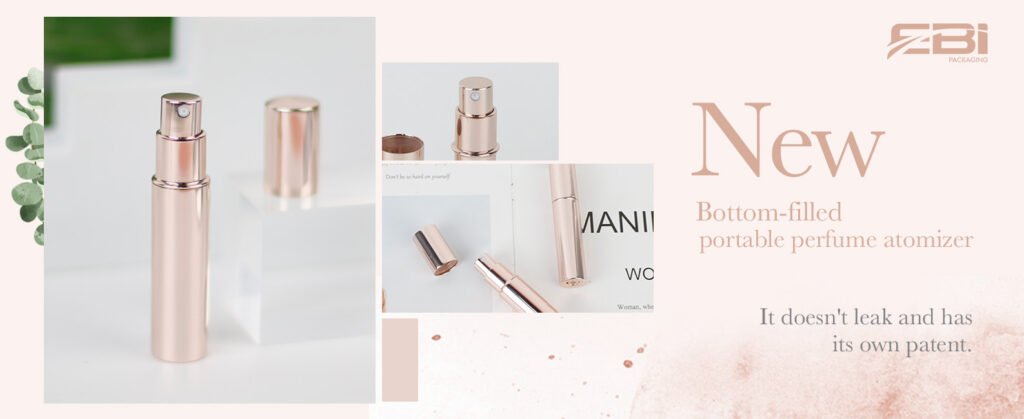
Redefining the Future competitiveness of the perfume industry Driven by the dual impetus of consumption upgrade and the awakening of environmental awareness, the perfume industry is undergoing a profound packaging revolution. The perfume market is expected to exceed 50 billion US dollars by 2025. As the first touchpoint for consumers to reach the product, the value of packaging has upgraded from a simple functional carrier to a tool for expressing brand concepts. Customized Packaging: From standardized production to emotional design 1. The segmentation of consumption scenarios has given rise to packaging innovation Modern perfume consumption has broken through the traditional gift scenario and extended to multiple fields such as daily personal use, portable travel, and limited edition collection. The 10-15ml travel pack launched by EBI features a magnetic metal casing, which not only meets the portability needs of business people but also extends the packaging life cycle through a replaceable inner core design, increasing the repurchase rate by 30%. This scenario-oriented customized solution is reshaping the product development logic. 2. Digital technology empowers personalized experiences The combination of AR virtual makeup try-on, AI scent recommendation systems and 3D printing technology has enabled consumers to shift from passive acceptance to active creation. The “Design Your Bottle” platform developed by the German packaging enterprise Quadpack allows customers to adjust the curvature of the bottle body, relief patterns and even the Angle of the nozzle online. Combined with real-time rendering technology to generate visual solutions, it reduces the traditional design cycle of 6 weeks to 72 hours. This C2M (Customer-to-Factory) model enables small and medium-sized brands to achieve high-end customization at a reasonable cost. 3. The value transformation of cultural symbols The Middle Eastern luxury brand Amouage has combined traditional Islamic geometric patterns with modern minimalism, embedding hand-carved silver totems on the bottle caps. The packaging of its Ramadan limited edition series is priced at 200% higher than the regular version, confirming the commercial value of cultural empowerment. This kind of deep customization has transcended appearance design and evolved into a carrier of brand narrative. Eco-friendly packaging: From Concept Advocacy to Systemic Transformation 1. Three breakthrough Directions of the Materials Revolution Bio-based materials: The glass bottles launched by Gucci in collaboration with LanzaTech are made from 20% industrial emission carbon dioxide, reducing the carbon footprint by 50%. Biodegradable packaging: British brand Wild uses seaweed extract to make replaceable capsules, which completely decompose within 48 hours. Circular Ecosystem: L ‘Oreal Group has launched the industry’s first packaging bank, committing to achieving 100% recyclable or reflow packaging by 2025. 2. Environmental Protection Design Methodology for the Entire Life Cycle Eco-friendly packaging has extended from end-of-pipe recycling to front-end design. Spanish perfume giant Puig has established a “cradle-to-cradle” assessment system, conducting carbon accounting from raw material extraction, production processes to transportation and storage. Its new series adopts a single material PE bottle body. Compared with traditional composite material packaging, the energy consumption for recycling and processing is reduced by 70%. 3.Market Validation of Green Premium Nielsen research shows that 67% of millennials are willing to pay a 10%-15% premium for eco-friendly packaging. The recycled glass bottle series of the Clean Beauty brand Byredo was sold out in the first month of its launch, proving that sustainable design has broken through the niche market and become the mainstream driving force of consumption. Integration and Innovation of Customization and Environmental Protection 1.Modular design resolves the paradox between environmental protection and individuality The “Water of a Lifetime” series created by the Japanese design studio Nendo for Issey Miyake achieves a balance between the reuse of basic components and the personalized customization of decorative elements through the combination of standardized bottle bodies and replaceable decorative rings. This modular thinking provides replicable solutions for sustainable customization. 2. Digital printing technology lowers the threshold for small-batch production The traditional hot stamping process requires cleaning the entire production line each time the design is changed, while the HP Indigo digital printing equipment can achieve zero-waste plate changing. The Italian manufacturer Bormioli Luigi uses this technology to provide personalized production services with a minimum order of 500 pieces for niche brands, and the unit cost is reduced by 40% compared with the traditional method. 3. Closed-loop System of Consumer Participation French startup Circolution has launched a “bottle recycling program”. Consumers can exchange empty bottles for design points, which can be used to customize exclusive embossing patterns for their next purchase. This model of transforming recycling behavior into creative motivation has built a sustainable consumption ecosystem. Among the unlimited design options, enhancing the overall appearance of the product is crucial for attracting a wide range of customers. EBI is committed to developing portable packaging for high-end perfume brands. We create their brands for all perfume enthusiasts, convey their concepts, and provide one-stop services! [email protected] +86-15170062480 9 AM to 6 PM, Mon-Friday Contact
EBI Shines at COSMOPROF WORLDWIDE BOLOGNA
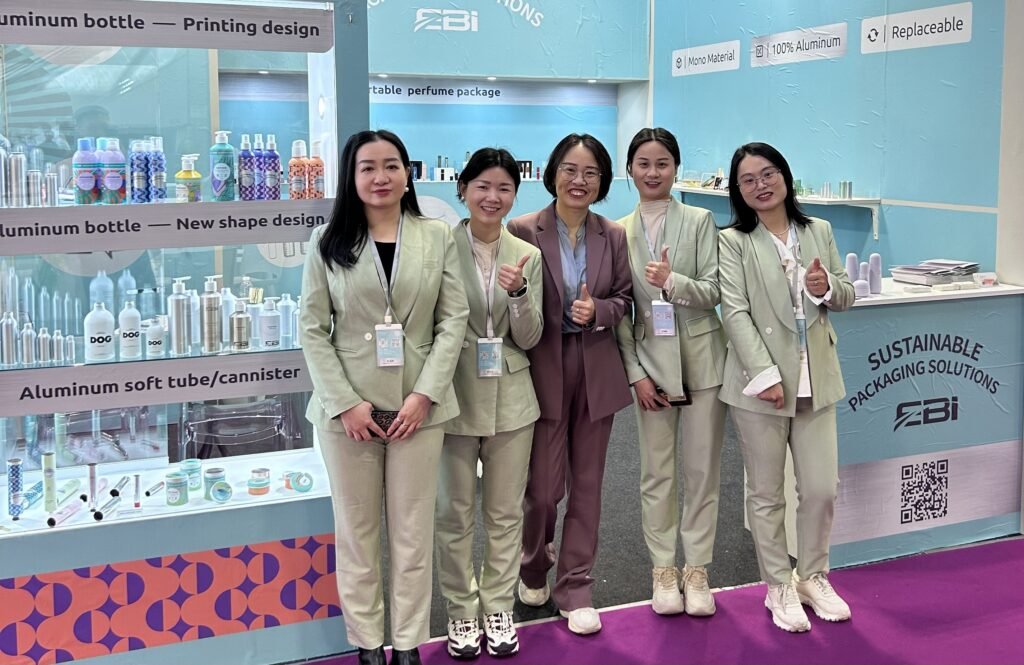
EBI at COSMOPROF WORLDWIDE BOLOGNA: A New Chapter in Aluminum Beauty & Fragrance Packaging Innovation This spring, EBI proudly participated in COSMOPROF WORLDWIDE BOLOGNA, one of the world’s most prestigious trade exhibitions dedicated to the beauty, cosmetics, and packaging industries. As a global leader in sustainable aluminum packaging, EBI took full advantage of this international stage to showcase our latest innovations in fragrance and makeup packaging, connect with industry professionals, and unveil a stunning range of newly developed products. The event, held in Bologna, Italy, attracted thousands of professionals from all over the world—making it the perfect opportunity for EBI to meet with both long-time partners and new potential clients. With a booth that blended sleek design, tactile product displays, and a welcoming atmosphere, EBI quickly became a popular destination among exhibitors and attendees alike. Meeting Customers Face-to-Face: Strengthening Global Connections One of the most rewarding aspects of the exhibition was the opportunity to engage with a wide range of customers from across Europe, Asia, the Americas, and beyond. These meetings served not only as a platform to showcase our products but also as valuable moments to listen, learn, and strengthen relationships with both long-standing and potential new clients. Many customers expressed genuine interest in our latest designs and praised EBI’s continuous investment in research and development. The feedback we received reaffirmed our direction and highlighted the market’s growing appreciation for high-quality, stylish, and environmentally responsible fragrance packaging. A Strong Debut: Launch of New Aluminum Fragrance Packaging At the heart of EBI’s participation was the launch of our new series of aluminum portable perfume sprayers. These products, designed with both aesthetics and performance in mind, immediately caught the attention of visitors. Each item represents a careful balance of form and function, reflecting global luxury trends while offering a distinctive EBI signature. Here’s an in-depth look at our newly released atomizers: Aluminum Lipstick Tube – Classic Meets Contemporary Our new lipstick tube reimagines one of the most iconic items in the beauty world. Crafted entirely from high-quality aluminum, this tube features a sleek, modern design with customizable finishes, including matte, glossy, brushed metal, or anodized colors. Customers loved its refined tactile feel, its smooth twist mechanism, and the premium weight that conveys luxury in every detail. With a strong focus on recyclability and durability, this lipstick tube offers an eco-conscious alternative to traditional plastic packaging without sacrificing elegance or user experience. Aluminum Deodorant Cream Tube – Clean Beauty, Clean Packaging Sustainability is more than a trend—it’s a movement. EBI’s aluminum deodorant cream tube addresses the growing demand for refillable, plastic-free personal care packaging. This product is ideal for natural deodorants, balms, or solid creams and was developed with both usability and style in mind. Lightweight yet durable, the tube offers an airtight, leak-proof construction to preserve product integrity. It features a smooth exterior that can be tailored with printing, etching, or colored finishes. Brands at COSMOPROF were especially interested in this tube’s application in zero-waste beauty lines and its appeal to sustainability-conscious consumers. Aluminum Mascara Tube – Precision in Packaging The newly released mascara tube combines sleek aluminum aesthetics with ergonomic functionality. Designed to fit comfortably in hand and operate with ease, this product provides a premium solution for eye makeup packaging. Available in a range of sizes, the aluminum mascara tube can be customized with various applicator types and wiper systems, as well as surface treatments including UV coating, laser engraving, and metallic anodizing. Customers praised its elegant design, durability, and the prestige it adds to any mascara product. Aluminum Case – Sustainable Packaging for Premium Presentation Also making its debut was the multi-purpose aluminum case, designed for a variety of applications such as fragrance gift sets, skincare products, or high-end cosmetic kits. Engineered to be sturdy, fully recyclable, and endlessly reusable, this aluminum case aligns with the beauty industry’s shift toward eco-conscious luxury. With options for engraving, embossing, and custom inner compartments, the case offers both functional versatility and visual sophistication. Visitors were especially impressed by the case’s minimalist aesthetics and its potential for customization in brand-exclusive packaging solutions. Portable Perfume Atomizers – Luxury On-the-Go Completing EBI’s new product lineup is the portable perfume atomizer, developed with modern consumers in mind. These sleek, refillable aluminum sprayers are perfect for travel, everyday use, or gift sets. Designed with a secure leak-proof mechanism and a choice of spray nozzles, the atomizers ensure ease of use without compromising style. With customization options such as magnetic caps, gradient colors, and surface printing, the atomizer can reflect any brand identity—from minimalist to bold and artistic. This product generated strong interest among niche fragrance brands and cosmetic companies looking to offer their customers a convenient, high-end fragrance experience. Strong Response from the Market EBI’s new product collection was enthusiastically received by attendees at COSMOPROF. Many customers described the lineup as “refreshingly innovative” and were impressed by the quality, versatility, and attention to detail across each design. The consistent feedback emphasized that EBI’s products are not only aesthetic enhancements, but also practical solutions aligned with industry shifts toward sustainability, refillability, and luxury appeal. Several visitors also expressed excitement about the collaborative customization possibilities EBI offers—an essential feature for brands looking to stand out in a competitive market. A Successful Exhibition and a Promising Future EBI’s participation in COSMOPROF WORLDWIDE BOLOGNA was a tremendous success on every level. We: Presented five newly developed aluminum packaging products for makeup and fragrance Engaged with a global network of customers, suppliers, and industry professionals Received excellent feedback on product design, functionality, and eco-friendly appeal Strengthened our position as a premium, reliable packaging partner for the beauty industry The energy and inspiration from COSMOPROF have invigorated our team, reaffirming our mission to deliver innovative, sustainable, and beautiful aluminum packaging to brands around the world. At EBI, innovation doesn’t end at the exhibition floor. With the success of our new product launches and the positive response from COSMOPROF attendees, we’re excited to move forward with new collaborations, expanded customization services,
Custom Perfume Atomizer Packaging
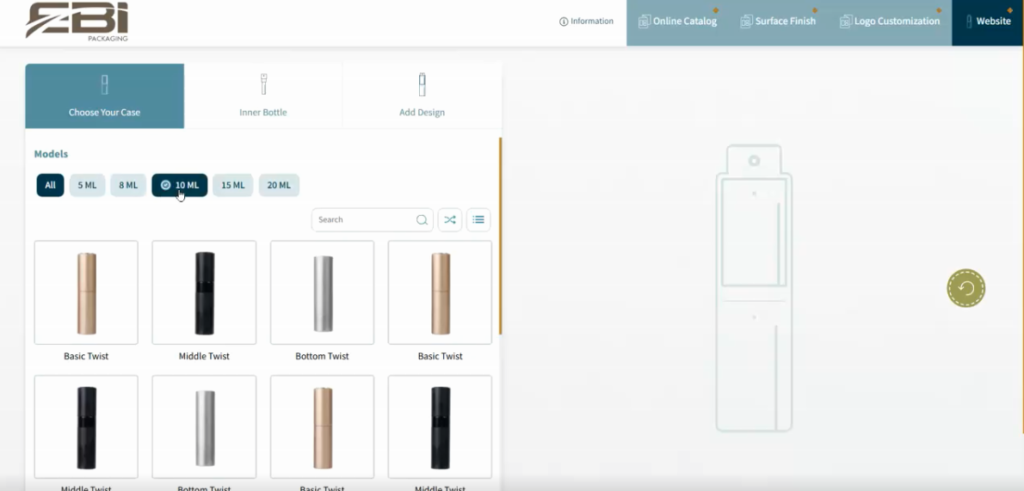
Custom Perfume Atomizer Bottle Packaging Launched Online! Play Video We are thrilled to announce the launch of our brand ——new online customization feature for perfume twist atomizer packaging! Designed to meet the unique needs of our customers, this innovative service allows you to create personalized perfume bottles that reflect your brand’s identity and vision. Whether you’re a perfumer, a brand owner, or a packaging enthusiast, our customization platform empowers you to design perfume twist atomizer bottles that stand out in the market. What Can You Customize? Our online customization tool offers a wide range of options to ensure your perfume bottle is as unique as your fragrance. Here’s what you can personalize: Bottle Capacity:Choose the perfect size for your perfume bottle, tailored to your product requirements and customer preferences. Color:Select from a variety of stunning colors to match your brand’s aesthetic or create a visually appealing design that catches the eye. Surface Treatment: Enhance the look and feel of your bottle with different surface finishes, such as matte, glossy, or textured effects. Logo Customization: Add your brand’s logo or any unique design element to make your perfume bottle truly one-of-a-kind. Our goal is to provide a seamless and intuitive customization experience, ensuring that the final product not only meets but exceeds your expectations. Why Choose Our Customization Service? High-Quality Materials: Our twist atomizer are crafted from premium aluminum, ensuring durability and a luxurious feel. User-Friendly Platform: Our online customization tool is easy to use, allowing you to visualize your design in real-time. Customer-Centric Approach: We value your feedback and are committed to optimizing our services based on your needs and suggestions. We Value Your Feedback At the heart of our customization service is a commitment to customer satisfaction. We encourage every customer who uses this new feature to share their feedback with us. Your insights will help us refine and improve our offerings, ensuring that we continue to deliver exceptional products and services. Get Started Today! Ready to create your perfect perfume bottle? Visit our website and explore the new customization function. Let your creativity flow and design a rotating perfume bottle that truly represents your brand. We look forward to helping you bring your vision to life! For any questions or assistance, feel free to reach out to our team. Let’s create something extraordinary together! We hope this article effectively introduces your new customization feature and highlights its benefits. If you need further adjustments or additional details, let us know! ABOUT US EBI is a sustainable packaging solutions provider founded in 2009. Ipurso, a brand under EBI, specializes in small-capacity needs for Perfume & Aromatherapy industry packaging and designservices. We focus on providing perfume atomizers, roll-on bottles, dropper bottles, inhaler tubes, and so on. [email protected] +86-15170062480 9 AM to 6 PM, Mon-Friday Contact Related post At the heart of our customization service is a commitment to customer satisfaction. We encourage every customer who uses this new feature to share their feedback with us. Your insights will help us refine and improve our offerings, ensuring that we continue to deliver exceptional products and services.
Explore Surface Techniques in Perfume Atomizers Packaging
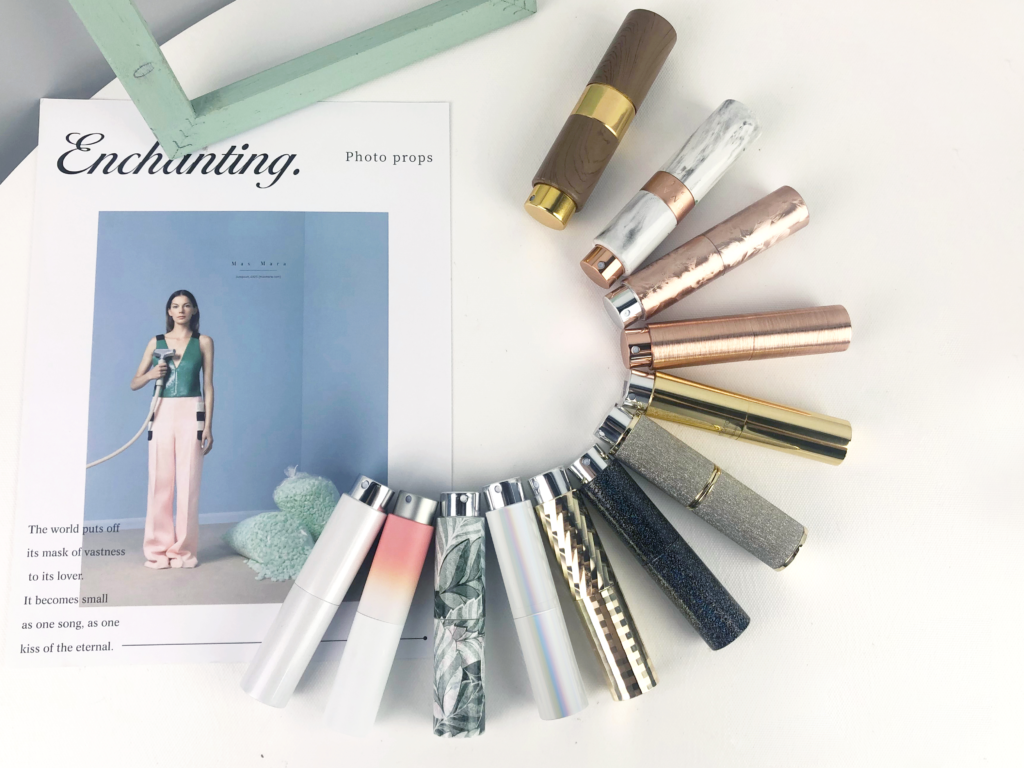
Explore Surface Techniques in EBI’s Perfume Atomizers Download Surface Finish File Download Logo Customization File In the world of perfume packaging, presentation is as essential as the scent itself. Perfume atomizers, designed for convenience and elegance, require meticulous attention to their surface finish to attract consumers and enhance user experience.The artistry and technology behind these sprayers involve a range of surface processes, each contributing to the overall aesthetics, durability, and functionality of the product. From sophisticated techniques like water transfer printing and laser engraving to modern approaches such as diamond CNC cutting and rubber printing, these processes transform simple containers into stylish accessories. EBI delves into the various surface processes used in the production of perfume atomizers,exploring their advantages and disadvantages to provide customers with a better, more comprehensive and more diverse packaging service for their brands. 1.Water transfer printing Water transfer printing, commonly known as water decals, refers to the transfer of patterns and patterns on the water-soluble film to the substrate through the pressure of water. Advantages: Complex Designs: Water transfer printing can produce intricate and detailed designs, covering curves and contours effectively. Versatility: It can be applied to various materials, including plastic, glass, and metal, making it suitable for different types of perfume sprayers. Seamless Coverage: The process allows for seamless application over complex shapes, eliminating issues like alignment and edge visibility. Vivid Colors and Patterns:This technique can replicate detailed images with vibrant colors, enhancing the aesthetic appeal of the sprayer. Customization: Brands can easily create unique and personalized designs, helping to differentiate their products in a competitive market. Disadvantages: Setup Complexity: The setup process can be complex and may require specialized equipment, which can increase initial costs. Environmental Factors: The process involves the use of chemicals and inks that may raise environmental concerns, although there are eco-friendly options available. Durability Concerns: Depending on the quality of the materials and application, water transfer prints may be less durable than screen printing, especially in high-contact areas. Limited Production Speed: The process can be slower than other printing methods, particularly for larger runs. Potential for Imperfections: If not done carefully, issues like bubbling or misalignment can occur, affecting the final appearance of the product. 2.Heat transfer printing: Heat transfer printing is another widely used perfume packaging material surface processing technology, which transfers pre-printed patterns or text to the packaging surface. The heat transfer printing process is simple and can achieve fine visual effects on packaging materials of different shapes. It is worth mentioning that heat transfer printing can create a variety of visual effects such as metallic feel and luster, further enhancing the high-end image of the product. In summary, heat transfer printing offers vibrant, durable designs suitable for various materials, but it comes with some limitations in color range and production efficiency. Advantages: High-Quality Graphics: Heat transfer printing allows for vibrant colors and intricate designs, enhancing the visual appeal of the atomizers. Durability: The prints are generally resistant to fading and scratching, ensuring that the designs remain intact over time. Versatility: This method can be applied to various materials, including glass and plastic, making it suitable for a wide range of atomizer designs. Eco-Friendly Options: Many heat transfer printing processes use water-based inks, reducing the environmental impact compared to traditional printing methods. Cost-Effective for Small Runs: It can be a cost-effective solution for smaller production runs or custom designs, as setup costs are relatively low. Disadvantages: Limited Color Range: While capable of vibrant prints, there may be limitations on certain color effects or gradients compared to other printing techniques. Temperature Sensitivity: The process involves heat, which can affect heat-sensitive materials, potentially limiting design choices. Complex Process: The setup for heat transfer printing can be complex and may require specialized equipment and training. Adhesion Issues: Depending on the material of the atomizer, there may be challenges with the print adhering properly, leading to peeling or fading over time. Production Speed: Heat transfer printing can be slower compared to other mass production methods, which may affect turnaround times for large orders. Inconsistency: The pattern of the perfume atomizers cannot be guaranteed at the time of production. 3.Anodic oxidation process: Oxidation refers to the chemical reaction between an object and the oxygen in the air, called oxidation reaction, which is a natural phenomenon. The oxidation described here refers to the surface treatment process of hardware products. Process flow: alkaline washing – washing – bleaching – washing – activation – washing – aluminum oxidation – washing – dyeing – washing – sealing – washing – drying – quality inspection – storage. The role of oxidation: protective, decorative, coloring, insulating, improving the bonding force with organic coatings, and improving the bonding force with inorganic coating layers. Secondary oxidation: By blocking or deoxidizing the surface of the product, the product is oxidized twice, which is called secondary oxidation.1) Different colors appear on the same product. The two colors can be close or different.2) The production of the protruding LOGO on the surface of the product. The protruding LOGO on the surface of the product can be stamped and formed, or obtained by secondary oxidation. Secondary oxidation is a process that can give metals or surfaces a distinctive, aged appearance. For a product logo on perfume atomizers, using secondary oxidation could create an elegant and vintage aesthetic that conveys a premium or artisanal quality. However, it also has its limitations. Advantages: Premium Aesthetic: Secondary oxidation can add a sophisticated, antique or vintage look, making the logo appear more luxurious and high-end. Durability: The oxidation layer can serve as a protective coating, potentially making the logo more resistant to minor abrasions and wear. Unique Visual Appeal: Each oxidized surface may develop a slightly different pattern, giving each atomizer a unique look that could appeal to customers seeking uniqueness. Compatibility with Metal: Oxidation works well on metals (like brass or copper), which are often used for luxury perfume packaging, enhancing the overall aesthetic. Disadvantages: Limited Color Options: Secondary oxidation often results in darkened or muted colors
 English
  Español
  Français
  한국어
한국어  日本語
日本語  Italiano
  Bahasa Indonesia
  Deutsch
  Português do Brasil